
When Your 40s Stop Being About Reinvention and Start Being About Reality
May 23, 2026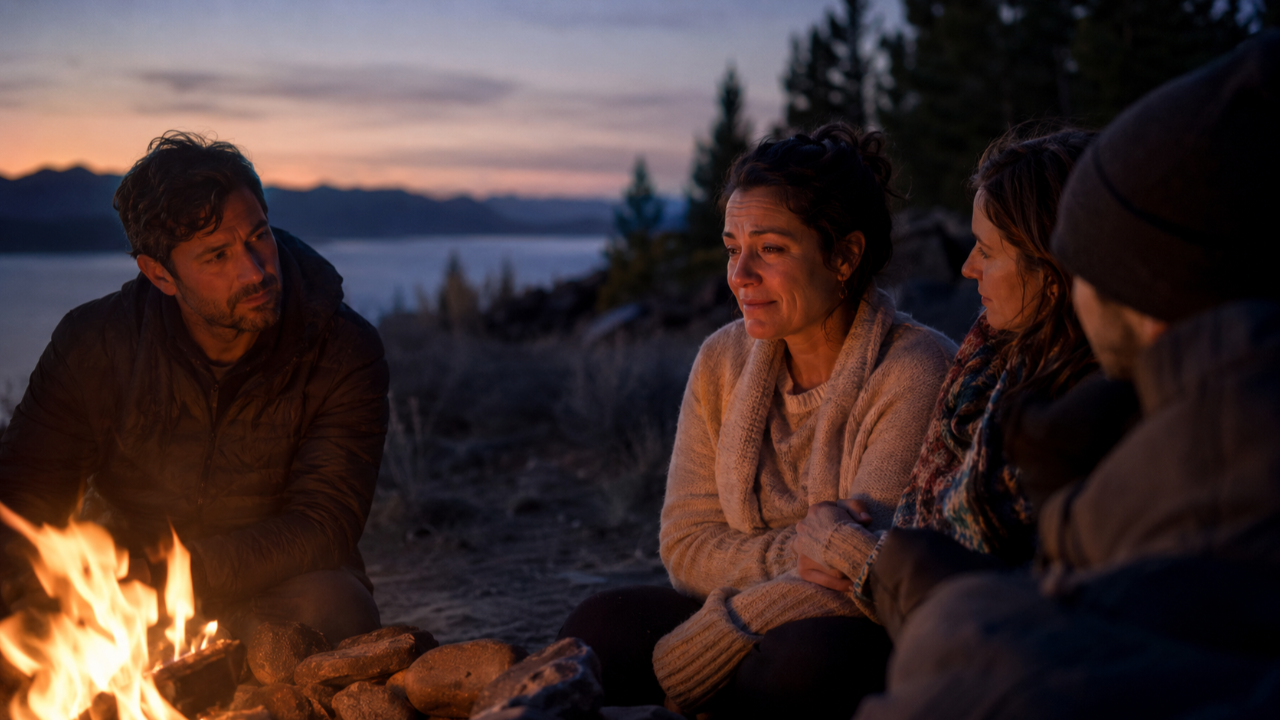
There is a version of your 40s that gets talked about often.
The one where your body starts changing.
The one where hormones shift.
The one where perimenopause arrives with its hot flashes, sleep interruptions, mood swings, and strange new symptoms that make you wonder if you're going freaking crazy.
And yes, that part is real.
For women, the 40s can feel like a full-body initiation. Our energy changes. Our cycles change. Our tolerance for the world changes. Our patience for things that once seemed acceptable becomes almost nonexistent.
For men, society has its own version of the story. The midlife crisis. The sports car. The younger girlfriend. The sudden need to prove something to themselves or the world.
Of course, those stereotypes are far too simple. They do not tell the whole truth.
Because I think one of the biggest things that happens in your 40s is not just physical.
It is emotional.
It is existential.
It is the moment you begin to understand, in a very real way, that life is not forever.
Not as a concept.
Not as something you know intellectually.
But as something you start witnessing up close.
You begin to see the mortality of your elders.
You watch your parents age.
You watch your friends lose their parents.
You watch people who were once strong, capable, funny, stubborn, vibrant, and fully themselves begin to decline.
And there is something deeply sobering about that.
In our 20s, we were not thinking about this. We were thinking about where we were going, who we were becoming, what we wanted to do with our life, romanticizing about love, where we wanted to live, what life might become.
Most of us were not sitting around thinking, “One day I may have to make medical decisions for my parents.”
We were not thinking about hospitals, long-term care, dementia, cancer, Do Not Resuscitate forms, funeral homes, estate paperwork, or whether someone we love should be kept alive when their quality of life is no longer there.
We were not thinking about what it would feel like to walk into a room and see someone you love looking like a shadow of who they used to be.
But then your 40s arrive.
And suddenly, these conversations are no longer theoretical.
They are happening in real time.
They are happening in hospital rooms.
They are happening over kitchen tables.
They are happening in group chats.
They are happening on phone calls you never wanted to receive.
They are happening between siblings who do not agree.
They are happening in the quiet moments after a doctor says, “We need to talk about next steps.”
And maybe one of the hardest parts is watching your friends go through it.
Watching someone you love lose a parent changes something in you.
You can see their grief before they even have words for it. You can see the exhaustion in their face. You can hear the heartbreak in the pauses between their sentences. You can feel how badly they want to be strong, organized, rational, and composed ... while also being a daughter, a son, a caregiver, a decision-maker, and a grieving human being all at once.
It is a lot.
It is too much, really.
And yet somehow, people are expected to carry it.
There is something especially surreal about the way life changes around this age.
One minute, you are sitting around a campfire on a Friday night, drink in hand, talking about vacations, kids, work, relationships, plans, and all the normal things people talk about.
And then suddenly, the conversation shifts.
Someone talks about their mom’s health.
Someone else talks about their dad’s decline.
Someone talks about the decision they had to make in the hospital.
Someone talks about how they do not recognize their parent anymore.
Someone talks about guilt.
Someone talks about resentment.
Someone talks about being exhausted.
Someone starts crying.
And before you know it, everyone around that fire has tears in their eyes.
Because we all know.
We all know we are not 20 anymore.
We all know life has become more real than we expected it to be.
We all know that the people who raised us, shaped us, challenged us, wounded us, loved us, or failed us are now becoming people we may have to care for, advocate for, or say goodbye to.
And no matter what the relationship was, that is complicated.
Grief is complicated.
Aging is complicated.
Family is complicated.
Love is complicated.
Sometimes you are grieving someone before they are even gone.
Sometimes you are grieving the parent you had.
Sometimes you are grieving the parent you never had.
Sometimes you are grieving the version of them that existed before illness, decline, addiction, dementia, or distance changed everything.
And sometimes you are grieving your own innocence.
The part of you that once believed the adults would always be the adults.
The part of you that thought someone else would know what to do.
The part of you that never imagined you would be the one signing forms, asking questions, making decisions, arranging care, calling funeral homes, or holding everyone else together.
But here we are.
And I think this is why we need to talk about it more.
Not in a dramatic way.
Not in a doom-and-gloom way.
But in an honest way.
Because so many people are walking through this silently.
Especially women.
And yes, men too.
But women are so often conditioned to hold everything. To organize everything. To remember everything. To check in on everyone. To manage the emotions in the room. To be the strong one. The capable one. The grounded one. The one who knows what to do.
In the spiritual world, this can become even heavier.
Because many of us have built identities around being “the helper”, “the healer”, “the intuitive one”, “the strong one”, “the one who can hold space for everyone else.”
We “Lone wolf it”.
But being strong does not mean doing everything alone.
Being spiritual does not mean bypassing your own grief.
Being the person others lean on does not mean you are not allowed to collapse into someone else’s arms once in a while.
We need each other.
And support does not always have to be grand or complicated.
Sometimes support looks like sitting beside someone and saying nothing.
Sometimes it looks like dropping off soup, muffins, coffee, or a meal that can be reheated when they forget to eat.
Sometimes it looks like driving them to the hospital.
Sometimes it looks like helping them write down questions for the doctor.
Sometimes it looks like sitting on the other end of the phone while they cry.
Sometimes it looks like saying, “I don’t know what to say, but I’m here.”
Sometimes it looks like letting someone repeat the same story three times because their nervous system is still trying to understand what happened.
Sometimes it looks like asking, “Do you want advice, or do you just need me to listen?”
Sometimes it looks like being brave enough to talk about the things everyone else avoids.
Reviewing impossible decisions.
Because these conversations are not morbid.
They are human.
They remind us that life is precious.
That time is not guaranteed.
That love needs to be spoken.
That paperwork matters.
That wishes should be known.
That support systems need to exist before the crisis comes.
And maybe this is one of the deeper initiations of our 40s.
Not just learning how to age.
But learning how to witness aging.
Learning how to let life become more honest.
Learning how to sit around the fire with people we love and tell the truth.
Not the polished truth.
Not the socially acceptable truth.
The real one.
The one that says:
“I’m scared.”
“I don’t know what I’m doing.”
“I miss who they used to be.”
“I’m exhausted.”
“I feel guilty.”
“I wish I could go back.”
“I need help.”
“I don’t want to do this alone.”
And maybe that is where the healing begins.
Not in having all the answers.
But in finally admitting that none of us were ever meant to carry the hardest parts of life by ourselves.
So if you are in this season — watching a parent decline, grieving someone you love, supporting a friend through loss, making decisions you never imagined you would have to make
Please hear this…
You are not failing because this feels heavy.
You are not weak because you are emotional.
You are not behind because you do not know what to do.
You are not alone because you are the one everyone else depends on.
This is life.
This is love.
This is grief.
This is the part no one prepared us for.
And still, somehow, there is beauty here.
Not in the pain itself, but in the way we show up for each other through it.
In the hands that hold ours.
In the friends who sit beside us.
In the meals left at the door.
In the late-night phone calls.
In the campfire conversations where everyone finally stops pretending they are fine.
Maybe our 40s are not just about becoming stronger.
Maybe they are about becoming softer.
Soft enough to tell the truth.
Soft enough to receive support.
Soft enough to let others in.
Soft enough to remember that being human was never meant to be a solitary experience.
Because one day, all of us will stand in the doorway between what was and what comes next.
And when that day comes, may we remember this…
We do not have to walk each other home with perfect words.
We only have to be willing to walk beside each other.
And sometimes, that is everything.
Michelle Palma
Purple Moon Healing Group
Feeling called to work with me?
Three ways you can
- Book a one-on-one session with me to work through your personal traumas, do some clearing or past life clean up BOOK HERE
- Join The Healing Path Membership! Live classes each month, vast library of everything spiritual you can think of JOIN HERE
- Join in personal circles. Check out CIRCLES & EVENTS

Stay Connected
If these reflections speak to something inside of you, I invite you to stay connected.
Join our mailing list to receive updates from Purple Moon Healing Group, including new blog posts from The Moon & The Mirror, free resources, upcoming events, courses, workshops, healing gatherings, and offerings within the spiritual community.
This is where I share the deeper reflections, the honest conversations, the soul nudges, and the spaces being created to support your healing, growth, and remembering.
Come as you are. Stay connected. Let the next door open when it is meant to.
We hate SPAM. We will never sell your information, for any reason.
